
 Case study · University
How CODE University brings international professors to Berlin
CODE University of Applied Sciences recruits its professors and lecturers internationally. relokate handles every move to Berlin, from the visa check before the offer to registration after arrival, families included.
Absolute lifesavers. Competent, empathetic and fast. We couldn't have done it without them.

Emilie Declercq-Lienard
Senior HR Manager, CODE University of Applied Sciences
The project in brief
CODE University of Applied Sciences is a private, state-recognised university in Berlin that teaches in English and recruits its faculty internationally. Rather than build immigration expertise in-house, CODE hands each international hire to relokate, a full-service visa and relocation provider for employers in Germany. relokate checks the visa route before CODE makes an offer, confirms the degree is recognised, prepares the visa application for the German embassy, files visas for spouses and children alongside, and takes care of registration and the residence permit in Berlin. CODE's HR team follows every case in the relokate dashboard.
About CODE University
CODE University of Applied Sciences is a private, state-recognised university of applied sciences in Berlin, founded in 2017. It offers English-language bachelor's and master's programmes in software engineering, design, and business and technology management, with students and faculty from many countries.
The challenge: semester dates don't move
CODE wants the best people in their field in front of its students, wherever they live today. That means hiring internationally, and everyone who comes from outside the EU needs the right visa before they can start teaching.
And a semester can't wait. If a professor's visa comes through late, a course starts without its lecturer or has to be reassigned. University HR teams are small and cover everything from contracts to payroll; German immigration law isn't their day job.
- Fixed semester start dates, with no room for a late visa
- A different route depending on contract, salary and research role
- Foreign degrees that have to be recognised as comparable
- Candidates from many countries, each embassy with its own process
- Partners and children who move to Berlin too
Our approach
How relokate runs each academic hire
Every hire goes through the same three phases, with one relokate team responsible from the first visa check to the first weeks in Berlin. CODE's HR team keeps the overview without having to ask anyone for updates.
Before the offer: route and recognition
Before CODE makes an offer, relokate checks the candidate's nationality, degree, contract type and salary. That decides the route, so it is settled before the contract is signed.
- EU Blue Card (§ 18g AufenthG) when the salary meets the threshold
- Permit for skilled workers with a degree (§ 18b AufenthG)
- Researcher permit (§ 18d AufenthG) with a hosting agreement
- Degree checked in anabin, or a ZAB statement of comparability
Visa applications for the whole family
relokate prepares each application for the German embassy responsible, books the appointment and checks every document before it goes in. Requirements differ from embassy to embassy, so each file is built for its embassy.
- Embassy appointment and document check
- Spouse and child visas filed alongside (family reunification)
- relokate is registered with Berlin's Business Immigration Service (BIS) and files cases there
- Formal follow-ups with the authorities, sent by relokate itself
Arrival in Berlin
After arrival, relokate takes care of the paperwork that comes with a new life in Berlin, so a new professor's first weeks go into preparing courses.
- Temporary housing that allows address registration (Anmeldung)
- Registration, bank account, health insurance, tax ID
- Visa converted into the residence permit
- School search for the children
Visibility for HR
Every hire in one view
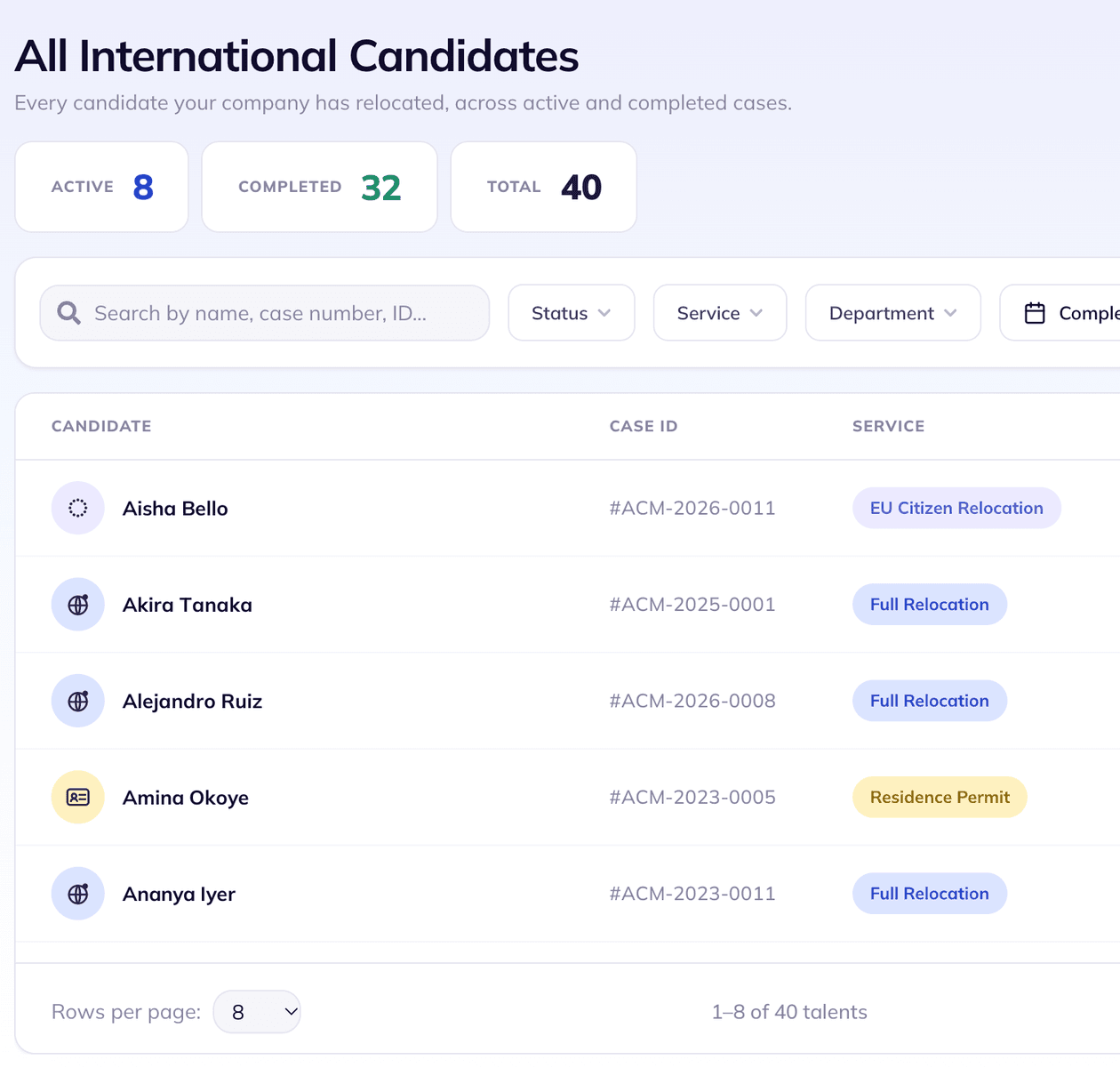
CODE's HR team sees each international hire in the relokate dashboard: where the case stands, which documents are in and when the professor starts. Questions go to one relokate team that knows every case, so nobody has to dig through email threads.
See the relocation software →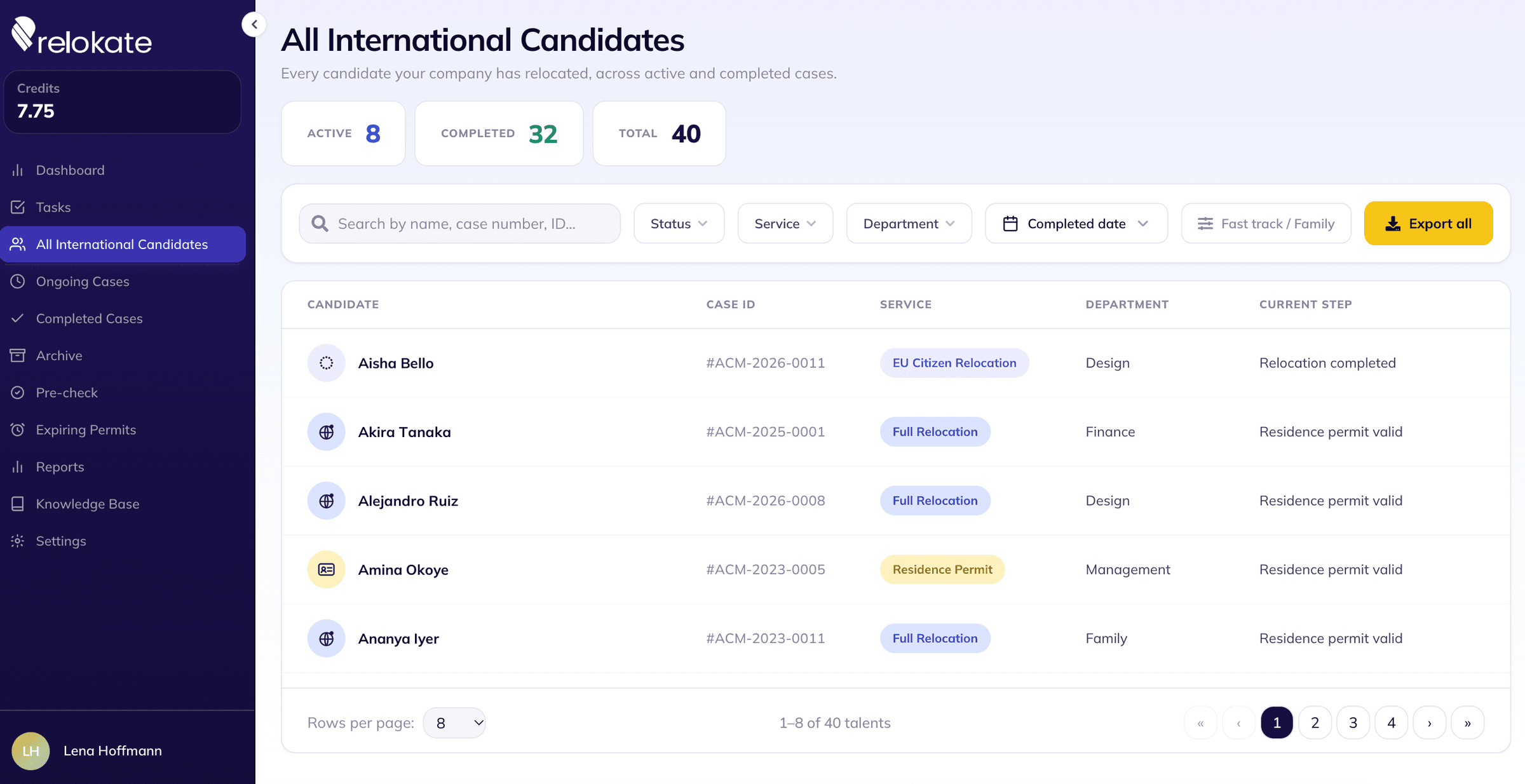
Results
What changed for CODE's HR team
CODE recruits on academic merit and leaves the immigration work to relokate. Its HR team brings international lecturers to Berlin without having to become immigration specialists.
Route settled before the offer
CODE knows which visa route a candidate will take before the offer goes out.
No immigration desk in-house
HR hands each hire to relokate instead of building immigration expertise of its own.
Families included
Visas for spouses and children, registration and the school search run alongside the professor's case.
One team for every case
One relokate team knows every CODE hire, with live status in the dashboard.
FAQ
Hiring international professors: common questions
What university HR teams want to know before they hire professors, lecturers or researchers from outside the EU.
How does relokate help universities hire international professors and lecturers?
relokate is a full-service visa and relocation provider for employers in Germany and takes over every step of each academic hire. Before the offer, it checks the route (EU Blue Card, § 18b skilled-worker permit or § 18d researcher permit) and whether the degree is recognised (anabin or a ZAB statement of comparability). It then prepares the embassy application and the family's visas, files with the responsible immigration office, at any of the more than 500 in Germany (in Berlin, relokate is registered with the Business Immigration Service), and handles Anmeldung, health insurance, bank account, housing and the school search. HR follows every case in the relokate dashboard. Pricing: cases from €950 plus an annual software & compliance subscription.
Pricing →Which residence permit does an international professor need?
Usually the EU Blue Card (§ 18g AufenthG): professors and lecturers with a recognised degree qualify if the salary reaches the threshold. Below it, the residence permit for skilled workers with a degree (§ 18b AufenthG) is the usual route. Researchers with a hosting agreement with a recognised research institution can use the researcher permit (§ 18d AufenthG). relokate checks which route fits before the offer goes out.
All work permit routes compared →Does the lower Blue Card salary threshold apply to professors?
Usually, yes. University and higher-education teachers belong to ISCO-08 group 23 (teaching professionals). For that group, § 18g(1) sentence 2 AufenthG allows the lower Blue Card threshold of €45,934.20 gross a year (2026), instead of €50,700, provided the Federal Employment Agency approves the employment. relokate prepares the employer's declaration on the employment relationship that the Agency reviews.
EU Blue Card guide →Do foreign academic degrees need to be recognised?
Yes, for the Blue Card and § 18b: the degree must be German, recognised in Germany, or comparable to a German degree. The anabin database shows how foreign universities and degrees are rated. Where it gives no clear answer, a statement of comparability from the ZAB (Central Office for Foreign Education) settles the question. relokate checks this before the contract is signed.
Degree recognition guide →Can the professor's family move at the same time?
Yes. Spouses and children apply for family reunification visas. relokate files them alongside the professor's application, so the family can plan one move rather than two. After arrival, relokate also helps with registration and the search for a school.
Family reunification →What if an embassy or immigration office doesn't respond?
relokate follows up with the authority directly, including formal follow-up letters (Untätigkeitsschreiben). If legal action is ever needed, an independent partner attorney can take over with full insight into the case; the attorney is engaged and paid by the employer. Across all relokate cases, more than 95% need no attorney escalation.
When should a university start the visa process?
As soon as you know who you want to appoint, so the route is settled before the offer. Waiting times for embassy appointments vary widely between countries. For the Blue Card and § 18b, the employer can also use the accelerated skilled worker procedure (§ 81a AufenthG): the immigration office gives pre-approval, the embassy then offers an appointment within three weeks and usually decides within another three weeks (§ 31a AufenthV). relokate checks for each appointment whether the procedure saves time.
Fast-track processing →Keep reading
- EU Blue Card guideSalary thresholds and requirements
- Skilled workers with a degree (§ 18b)The route when the Blue Card doesn't fit
- Degree recognitionanabin, ZAB and what HR needs to check
- Family reunificationVisas for spouses and children, filed in parallel
- Relocating to BerlinAuthorities, housing and registration in Berlin
- All customer storiesEmployers that relocate their hires with relokate
Hiring professors from abroad?
Whether it's one professor for next semester or several appointments a year, relokate runs visas and relocation end to end and keeps your HR team informed at every step. In a 30-minute demo, we'll show you how it would work for your hires.
Book a 30-minute demoNot ready yet? Check a candidate's visa options with the free Visa Pre-Check




Trusted by HR teams at KoRo, Marquardt, Medwing & CODE
5.0 on Google · 77 reviews1,500+ relocations since 2020 · 99%+ success rate